Welcome to my blog! I post about the world, writing, science, miscellany, books, movies, politics, and a wide range of other subjects. Take a look around and see if something catches your eye!
You may have noticed from the title that I haven't named a specific field of study, unlike previous posts. That's because, unfortunately, there are exactly zero branches of physical science (my theme's center) beginning with the letter "j". So this time I bring you a recent scientific discovery only: The synthesis of the new element ununtrium 113 by Japanese scientists.
Ununtrium, element 113 on the periodic table, is a solid at room temperature and can only exist by its being synthesized; it is not a natural element. It was first created by a group of Russians and Americans in 2004, along with element 115, but the results needed to be verified before it could be declared that 113 had been created. The Japanese scientists used a different method to create 113, which acted as that verification.
If scientists in Japan decide to name the element they discovered with a word including "j" it would bring the periodic table one letter closer to filling out the alphabet--so far "j" and "q" remain off the chart. The element jodium is the Dutch word for iodine, but officially iodine is denoted by the letter I, not J.
Nanotechnology is the science of building objects the size of atoms and molecules, from 1-100 nanometers.
A nanometer (nm) is a billionth of a meter (10 to the power of -9) or about the length of six carbon atoms; for further comparison, the size of a red blood cell is around 7,000 nm. The word "nano" comes from the Greek word for dwarf. Richard Feynman (who won the Nobel Prize for Physics) was the first to lecture on nanotechnology in 1959, though the phrase itself was coined in 1974 by Norio Taniquichi.
Matter at the nanoscale displays unique physical, chemical, and biological traits, and nanotechnology can create materials that are stronger, more conductive, more chemically reactive, reflect more light, and have different magnetic properties. These changes are called quantum effects, and happen only at the nanoscale.
Nanotechnology has applications in a wide range of fields, such as medicine, computing, information and communications technology, the aerospace industry, materials synthesis, and imaging and printing. It has been used in sunscreens, cosmetics, clothes, eyeglasses, Tupperware products, computers, baseball bats and tennis rackets, automobiles, and batteries, to name a few. Future uses may include the engineering of building materials, drugs, artificial tissues, food, solar panels, improvement of water and air quality, and there are even experiments being done to see if an invisibility cloak could be made with nanoparticles.
It has been predicted that by 2014, $2.5 trillion worth of goods will have some form of nanotechnology, or around 15% of all global output. There is a more negative side to nanotechnology, however, since it could have negative effects on living things (humans included) and create new nano pollutants, in addition to other other unforseen dangers.
Notable Nanotechnologist:
Naomi Halas
Naomi Halas is the Stanley C. Moore Professor in Electrical and Computer Engineering, a Professor of Biomedical Engineering, Chemistry, Physics and Astronomy, and the Director of the Laboratory for Nanophotonics (which she founded) at Rice University. She has over 15 issued and pending patents and is the co-founder of Nanospectra Biosciences, Inc., a company developing photothermal cancer therapy. She is a Fellow of the Optical Society, the American Physical Society, the International Society for Optical Engineering (SPIE), the Institute for Electrical and Electronics Engineers, and the American Association for the Advancement of Science.
Her research group focuses on metallic nanoparticles and nanostructures and their optical characteristics, including light absorption and scattering and plasmon-plasmon interactions (a plasmon is the oscillation of free electrons). Projects involve diagnostic and therapeutic nanoparticles and their potential uses in cancer therapy and imaging, and light-triggered gene therapy (nanoparticles are deposited in cells, and light causes them to release DNA).
Do you worry about the potential issues that nanotechnology could bring with it? Or do you think humanity's engineering at the nanoscale is more on the positive side? Or (as with so many fields these days) both?
Laser is an acronym for Light Amplification by Stimulated Emission of Radiation. It has been noted, however, that the acronym "Loser" for Light Oscillation by Stimulated Emission of Radiation would be more accurate.
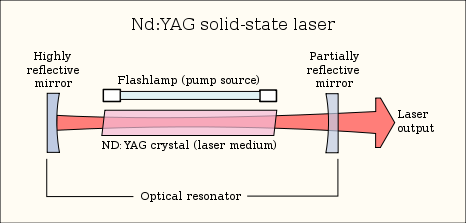
A laser is constructed from an energy source, a gain medium, and two mirrors.
Some of the most common sources of energy for a laser, called the pump source, are flash lamps, arc lamps, and external lasers, but microwaves, radiofrequency radiation, the sun, electric glow discharge (a type of plasma), electron beams, the supersonic flow of gases such as CO2, chemical reactions, and nuclear fission have also been used.
There are thousands of different gain media, which is also known as laser media. Liquids such as organic chemical solvents combined with chemical dyes, gases such as carbon dioxide, argon, krypton, and mixtures of helium-neon, and solids such as crystals and glasses with added impurities, are some examples.
The optical resonator, also called the optical cavity, in its simplest form is made of two parallel mirrors surrounding the gain medium. One is a high reflector and one is a partial reflector.
When light is spontaneously emitted from the medium, it is reflected by the mirrors back into the medium and then amplified by stimulated emission. Stimulated emission is when an atom interacts with a wave of a certain electromagnetic frequency, drops to a lower energy level, and emits a photon.
The emitted photons are what you see as a beam of light.
In 1960, lasers were called a "solution looking for a problem". Nowadays, they have widespread uses in electronics, information technology, science, medicine, industry, law enforcement, military, and entertainment.
How do you see the future of lasers? Do you think they'll continue being important in technology, or that they'll become obsolete with another discovery?
Also, while it's not particularly earth-shattering, I rewrote the "About This Blog" page. I felt like it needed a serious change . . . and if you're interested, you can go HERE to read the new one.
***An unfinished version of this post accidentally published this morning. My fault, because I meant to say 12:00 PM, not 12:00 AM. Sorry about that. Just another reason why a switch should be made to 24 HOUR TIME. It would make life so much easier. Anyway, I'll rant some other time (that's hopefully in 24-hour!)--on with the post.***
I've already covered Cold (go HERE to read that post) but ice is a very different state of matter.
Essentially water frozen into a solid state, ice is the "most abundant of the varying solid phases on Earth's surface". The most common phase transition (i.e. the most common way ice forms) is when water is cooled to 0 C/273.15 K/32 F at standard atmospheric pressure, depending on which temperature scale you use. It can also form without going through a liquid state, such as when vapor turns into frost.
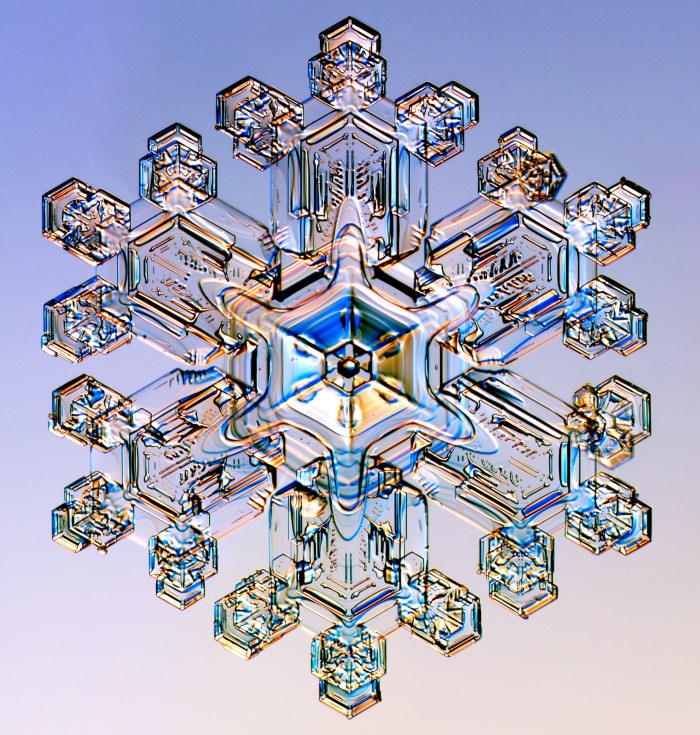
Ice is officially considered a mineral. Its crystalline structure is based on water molecules, which consist of covalent bonds between oxygen atoms and two hydrogen atoms. Weak, adjacent hydrogen bonds between molecules control much of the physical properties of water and ice.
The only non-metallic structure known to expand when it cools, frozen water is 9% less dense than liquid water. This is because the hydrogen atoms have a slight positive charge, and the oxygen atoms have a slight negative charge, and the solid hexagonal structure that forms because of their bond takes up more space than when water is moving freely in liquid state.
Ice is one of 15 known crystalline phases of water. Besides Ih, which is your usual frozen water, there is:
Amorphous Ice (ice without any crystal structure). Ice Ic(ice where oxygen atoms are arranged in a diamond shape, produced at temperatures of 130 and 220 K). Ice II (ice with a rhombohedral crystalline structure, formed by compressing Ih at 190-210 K). Ice III (ice with a tetragonal crystalline structure, formed by cooling water to 250 K at 300 MPa--MPa stands for megapascal. One megapascal is one million pascals, and a pascal is one newton of force per square meter). Ice IV (ice in a metastable rhombohedral phase. (Metastable means in a state of equilibrium, but easily sent into a lower energy state with only slight interaction.) It is formed by heating amorphous ice at a pressure of 810 MPa). Ice V (ice in a monoclinic crystalline phase, and the most complicated of all phases. It is formed by cooling water down to 253 K at 500 MPa.) Ice VI (ice with a tetragonal crystalline structure and formed by cooling water to 270 K at 1.1 GPa. GPa stands for one billion (thousand million) pascals.)
. . . and for the other phases, go HERE.
(I couldn't resist sharing an eagle sculpture. SOURCE)