Showing posts with label Technology. Show all posts

23 April, 2013

A To Z Challenge: Technology And The Next Big Thing (That Could Invade Your Privacy To Extremes)

Technology is science applied to real-life problems. Physics equations and observations are all well and good--but technology allows the enormous range of scientific fields to play a very large part in people's everyday lives. The term technology has various uses: It can refer to a specific subset of machines (such as space technology) and it can refer to the total knowledge and capability of a society.

To be honest, the second part of this post (the "recent developments" section) came to me before the introduction. Google Glass is a piece of technology I've been wanting to post about for a while and the A to Z Challenge seemed like an ideal spot, seeing as I've already proposed some controversial subjects in previous posts.

Antonio Zugaldia, CC-BY-3.0, via Wikimedia Commons
Google Glass is a pair of glasses with the capabilities of a smartphone. You give it orders to give you directions, send messages, take photographs and videos, etc., and all while wearing the device as feedback appears in a small screen on one side of the eyeglass frame. While some people (me included) don't like the idea of having multimedia so close to one's actual eyeball, the privacy concerns have to be the most argued-over bit (though there are also concerns about distracted driving and so on).

The problem? There is no way for someone else to tell if a person wearing the glasses is recording--which could mean your face is unwittingly being uploaded to Google's servers and could be played back by the person who recorded the footage, or, perhaps, by governments; facial recognition software could be applied to identify crowds of people just because someone walked through a busy location with Google Glass recording. There aren't any limits to when someone can record, either; imagine all the moments most people would absolutely not want saved for another person to see.

Google Glass is scheduled to arrive some time in 2014, according to the Executive Chairman of Google, Eric Schmidt.

**********

Sources:
http://www.thefreedictionary.com/technology
http://techland.time.com/2013/04/23/three-questions-i-hope-google-answers-before-google-glass-is-released/
http://www.latimes.com/business/technology/la-fi-tn-google-glass-2014-eric-schmidt-20130423,0,3402891.story
http://www.google.com/glass/start/

**********

Will you be wearing the new Google Glasses once they're released? If you run across someone wearing them, will you be worried?


-----The Golden Eagle

09 April, 2013

A To Z Challenge: Horology And How Your Computer May Be Going To Spaz

  © Copyright Peter Trimming and licensed for
reuse under this Creative Commons Licence
Horology is the science of measuring time and the study of making timepieces. Humans have been working at the definition and measurement of time for thousands of years; as early as 3100 BCE the Egyptians had developed a 365-day calendar based on the appearance of the star Sirius in the sky and around 3500 BCE they had developed obelisks that acted as sundials. Technology has come a very long way since large angular pillars stuck in the ground, and our current idea of a "clock"--a steady mechanism capable of standing on its own--began to emerge in 1656 when Christiaan Huygens developed the first pendulum clock.

Taking another rather large leap forward in time, today's computers (whether PC or Apple or what have you) are running on what's known as Unix Time. (The name "Unix" comes from the fact it was a dominant operating system back when computing was just getting started.) It's based on a 32-bit number and has been counting every second since January 1, 1970.

Once the number reaches 2,147,483,764, however, there's a bit of a problem: When a 32-bit number reaches this value, it can no longer count upwards. Because of this, computers using Unix Time will revert to December 13, 1901 once time hits January 19, 2038, i.e. devices will believe it's the 1900s when it's actually the mid-2000s. The solution? Switch to 64-bit systems, which will run out of values in the year 292,277,026,596.


**********

Sources:
http://www.thefreedictionary.com/horology
http://www.horology.com/vir-lib-horology.htm
http://www.nist.gov/pml/general/time/index.cfm
http://www.unixtimestamp.com/index.php

**********

Is your computer a 32-bit? Do you think there will be any major problems in 2038, or do you think all the important devices will have been replaced with 64-bit by then?


-----The Golden Eagle

06 August, 2012

The Successful Curiosity Landing!

Last night, the Curiosity rover (which I posted about in further detail yesterday) landed on Mars.

It was successful, with everything going to plan, and the first pictures of the red planet were posted just a few minutes after:


And then more pictures came:


Including one of the landing of the rover, via the HiRISE camera, which is orbiting Mars:


If you'd like to know more, this video sums up (some of) the most exciting things about the Curiosity rover:


-----The Golden Eagle

20 April, 2012

A-Z Blogging Challenge: Robotics

The Mars Spirit rover. Public domain image. SOURCE.
Robotics is a branch of technology focused on the design and use of robots.

The word "robot" comes from the Czech word robota, or "forced labor", and the word "robotics" was coined by Science Fiction writer Isaac Asimov in 1941. There are five main physical elements to a robot: the structure, the power source, the sensors, the actuators (the things that make the robot move), and the controller (the "brain" of the robot). Most robots are mobile (using wheels or joints run by actuators, which can be powered by electric motors, hydraulic systems, or pneumatic systems), have an electrical circuit to which the actuators are connected, and are reprogrammable.

A common type of robot is the robotic arm, a stationary type of robot that has seven segments and six joints; they are prominent in manufacturing and require a good deal of accuracy. Robots that can move from place to place are more complicated, and require wheels, tracks, or legs, in addition to some way of properly controlling those methods of movement and compensating when out of balance. There are even more robot types when you consider remote and autonomous robots. Remote robots (or puppet robots) are controlled by people, whereas autonomous robots can control their movements on their own. They use a variety of sensors including ultrasound and infrared, and some of the fancier machines use stereo vision (which gives them depth perception).

By Richard Greenhill and Hugo Elias,
CC-BY-SA.3.0. SOURCE.
Current and future uses of robots include in regular homes (vacuum cleaning, lawn mowing), exploration of regions too dangerous for people to explore, research, the military (unmanned aerial vehicles, combat), farms, industry (car production, electronics, automated guided vehicles), healthcare (for the elderly or disabled), entertainment, and in outer space (space probes, rovers).


Notable Roboticist:

Yoky Matsuoka

Yoky Matsuoka is an Assistant Professor at the Department of Computer Science and Engineering, University of Washington, who obtained her Ph.D. from the Massachusetts Institute of Technology (MIT). Her research focuses on "neurobotics" (also spelled neurorobotics), or how electrical signals in the brain could translate into movement of a robotic prosthetic. It involves several fields, including computer science, biomechanics, biophysics, material science, and psychophysics. She is also the head of the non-profit YokyWorks Foundation, which creates specific devices for people with disabilities.


Video of Yoky Matsuoka explaining neurobotics:


**********

Sources:
http://ase.tufts.edu/roboticsacademy/Robotics.htm
http://www.cs.cmu.edu/~chuck/robotpg/robofaq/1.html
http://engineering.nd.edu/NDNRW/what-is-robotics
http://www.macfound.org/site/c.lkLXJ8MQKrH/b.2913825/apps/nl/content2.asp?content_id={855A99DE-8277-4E4A-BCC2-10BDCEC1F969 
http://www.melbpc.org.au/pcupdate/2205/2205article10.htm
http://www.nasa.gov/audience/foreducators/robotics/home/what_is_robotics_58.html
http://www.razorrobotics.com/knowledge/?title=Robot
http://science.howstuffworks.com/robot.htm
http://seattletimes.nwsource.com/html/pacificnw/2008980970_pacificpyoky05.html 
http://www.thefreedictionary.com/robotics
The Unofficial Guide to LEGO MINDSTORMS Robots by Jonathan B. Knudsen

**********

What do you think of when someone says "robot"? Computers, factories, Mars rovers, the famous (and anthropomorphized) Wall-E, C-3PO, R2-D2, Sonny?


-----The Golden Eagle

16 April, 2012

A-Z Blogging Challenge: Nanotechnology

Carbon nanotubes, by Mstroeck. CC-BY-SA-3.0. SOURCE.
Nanotechnology is the science of building objects the size of atoms and molecules, from 1-100 nanometers.

A nanometer (nm) is a billionth of a meter (10 to the power of -9) or about the length of six carbon atoms; for further comparison, the size of a red blood cell is around 7,000 nm. The word "nano" comes from the Greek word for dwarf. Richard Feynman (who won the Nobel Prize for Physics) was the first to lecture on nanotechnology in 1959, though the phrase itself was coined in 1974 by Norio Taniquichi.

Matter at the nanoscale displays unique physical, chemical, and biological traits, and nanotechnology can create materials that are stronger, more conductive, more chemically reactive, reflect more light, and have different magnetic properties. These changes are called quantum effects, and happen only at the nanoscale.

Nanotechnology has applications in a wide range of fields, such as medicine, computing, information and communications technology, the aerospace industry, materials synthesis, and imaging and printing. It has been used in sunscreens, cosmetics, clothes, eyeglasses, Tupperware products, computers, baseball bats and tennis rackets, automobiles, and batteries, to name a few. Future uses may include the engineering of building materials, drugs, artificial tissues, food, solar panels, improvement of water and air quality, and there are even experiments being done to see if an invisibility cloak could be made with nanoparticles.

Multi-nanotube, by TED-43. CC-BY-SA-3.0. SOURCE.
It has been predicted that by 2014, $2.5 trillion worth of goods will have some form of nanotechnology, or around 15% of all global output. There is a more negative side to nanotechnology, however, since it could have negative effects on living things (humans included) and create new nano pollutants, in addition to other other unforseen dangers.


Notable Nanotechnologist:

Naomi Halas

Naomi Halas is the Stanley C. Moore Professor in Electrical and Computer Engineering, a Professor of Biomedical Engineering, Chemistry, Physics and Astronomy, and the Director of the Laboratory for Nanophotonics (which she founded) at Rice University. She has over 15 issued and pending patents and is the co-founder of Nanospectra Biosciences, Inc., a company developing photothermal cancer therapy. She is a Fellow of the Optical Society, the American Physical Society, the International Society for Optical Engineering (SPIE), the Institute for Electrical and Electronics Engineers, and the American Association for the Advancement of Science.

Her research group focuses on metallic nanoparticles and nanostructures and their optical characteristics, including light absorption and scattering and plasmon-plasmon interactions (a plasmon is the oscillation of free electrons). Projects involve diagnostic and therapeutic nanoparticles and their potential uses in cancer therapy and imaging, and light-triggered gene therapy (nanoparticles are deposited in cells, and light causes them to release DNA).

Video:


Watch Profile: Naomi Halas on PBS. See more from NOVA scienceNOW.


**********

Sources:
http://www.britannica.com/EBchecked/topic/962484/nanotechnology
http://www.cdc.gov/niosh/topics/nanotech/
http://www.crnano.org/whatis.htm
http://www.foresight.org/nano/
http://halas.rice.edu/research 
http://www.merriam-webster.com/dictionary/nanotechnology
http://www.nano.gov/nanotech-101
http://www.nanowerk.com/nanotechnology/introduction/introduction_to_nanotechnology_1.php 
http://www.nanotechproject.org/topics/nano101/introduction_to_nanotechnology/
http://www.pbs.org/wgbh/nova/body/halas-nanotech.html
http://www.thefreedictionary.com/nanotechnology

**********

Do you worry about the potential issues that nanotechnology could bring with it? Or do you think humanity's engineering at the nanoscale is more on the positive side? Or (as with so many fields these days) both?


-----The Golden Eagle

02 April, 2012

A-Z Blogging Challenge: Biotechnology

By Umberto Salvagnin, CC-BY-2.0. SOURCE.
Biotechnology, also called biotech, is the use of biological systems and living organisms, or their derivatives, for specific purposes.

It stems from chemistry, biology, physics, engineering, information technology, and other such scientific fields; the phrase "biotechnology" was coined by Karl Ereky in 1919, who was a Hungarian engineer. It is an applied science, which means, unlike some fields which commit to research to find an answer to a theory that may or may not have any industrial, manufacturing, or other commercial value, biotech research usually has specific goals in mind.

Some early examples of biotech include fermentation (for bread, wine, and beer), selective breeding of animals, and cultivation of crops (which was given a boost by Gregor Mendel, who is called the father of genetics), while more recent ones are cloning, biofuels (ethanol and biodiesel), nanobiotechnology (100,000 nanoparticles equals the thickness of a piece of paper), regenerative medicine (the growing of new organs and tissues), and agricultural biotechnology (ag biotech).


Notable Biotechnologist/Geneticist:

Francis S. Collins

Francis S. Collins. Public domain image. SOURCE.
Francis Collins was the director of the National Human Genome Research Institute, also known as the NHGRI, and became the director of the National Institutes of Health in 2009. He graduated from the University of Virginia with a B.S., from Yale University with a Ph.D. in Physical Chemistry, and from the University of North Carolina with an M.D.

He led the Human Genome Project, which aimed to sequence all 3 billion base pairs of human DNA. A draft of the genome was published in 2000, an analysis in 2001, and a reference sequence in 2003. Collins's research has led to the identification of genetic variations associated with Type-2 diabetes, and the genes that cause cystic fibrosis (buildup of mucus in the lungs and digestive tract in children and young people), Huntington's Disease (degeneration of nerve cells in the brain), and Hutchinson-Gilford Progeria Syndrome (accelerated aging in children).

He was awarded the Presidential Medal of Freedom in 2007 for his work in science/genetics; the medal is the highest honor given to a civilian in the USA.

A video about Francis Collins and his work:

http://www.youtube.com/watch?v=8JZePaN-qWA

**********

Sources:
http://www.accessexcellence.org/RC/AB/BC/what_is_biotechnology.php
http://www.biotechinstitute.org/what-is-biotechnology
http://www.cbd.int/convention/articles/?a=cbd-02
http://www.genome.gov/10000779
http://www.merriam-webster.com/dictionary/biotechnology
http://www.ncbi.nlm.nih.gov/pubmedhealth/PMH0001167/
http://www.ncbi.nlm.nih.gov/pubmedhealth/PMH0001775/
http://www.ncbi.nlm.nih.gov/pubmedhealth/PMH0002622/
http://www.ncbiotech.org
http://www.thefreedictionary.com/applied+science
http://www.thefreedictionary.com/biotechnology
http://www.wisegeek.com/what-does-a-biotechnologist-do.htm


**********


Where do you think biotech will head next? Do you worry about genetic engineering and other newer fields?


-----The Golden Eagle

23 April, 2011

A-Z Blogging Challenge: T Stands For: Teleportation

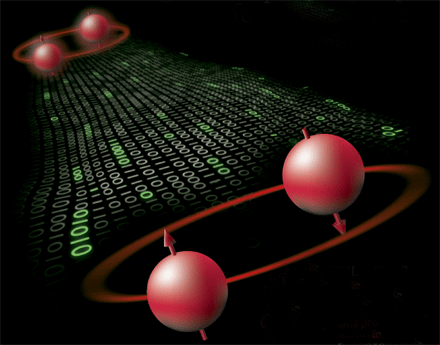
Teleportation usually comes across as a science fiction mechanism of traveling interstellar distances instantaneously, between planets, from ships, to bases, and etc. But while it isn't as grand or as immediately obvious as a person being teleported across space, quantum teleportation (a bit different from transfer of actual matter) has been done by scientists.


Quantum teleportation, also called entanglement-assisted teleportation, is when a unit of quantum information or "qubit" is transmitted from one place to another, without that qubit crossing the space between the two points. It doesn't physically transport any matter or information, and no particles are reassembled at the second location.


Scientists are capable of doing this because of quantum entanglement, which is when particles are linked to each other even when physically separated, share a single quantum state, and remain in quantum superposition (the idea the particles can be two things at the same time--this links to the idea of Schroedinger's cat of being both alive and dead) until a measurement is taken. Because the particles are entangled, and in two states at once, in theory the measurement of one would immediately affect the other, faster than the speed of light. Albert Einstein called this "spooky action at a distance".


Some uses for this technology? Quantum teleportation could be used for communications. It could allow transmission of large amounts of information, speed up quantum computation, and perform tasks impossible for classical systems.

*****

Sources:
http://www.time.com/time/health/article/0,8599,1874760,00.html
http://www.livescience.com/7647-teleportation-milestone-achieved.html
http://en.wikipedia.org/wiki/Teleportation
http://en.wikipedia.org/wiki/Quantum_teleportation
http://www.jqi.umd.edu/news/211-entanglement-with-frequency-combs.html
http://www.research.ibm.com/physicsofinfo/members/teleportation.htm
http://en.wikipedia.org/wiki/Quantum_entanglement
http://plato.stanford.edu/entries/qt-entangle/#2
http://www.quantum.at/research/quantum-teleportation-communication-entanglement/first-quantum-teleportation.html
http://www.quantiki.org/wiki/Quantum_communication

*****

Do you think we'll be using quantum technology in the relatively near future? Do you think teleportation will ever reach the point where people, or even just macroscopic objects, could be transported from one place to the other?

And please, PLEASE don't quote Star Trek. I've read enough articles researching this post with the phrase stuck in there somewhere. :P

-----The Golden Eagle

18 February, 2011

Guest Post at My First Book, Awards, and Watson

Breaking News, everyone! Today I'm guest posting over at Misha's blog My First Book on Strong Female Protagonists.

It would be awesome if you went to check it out. :)

*****

In other news, I was awarded the Stylish Blogger Award by Luke Raftl at All your stars are out. Thank you so much, Luke!


(I hope you'll excuse me if I don't pass this on/answer the questions. I've done it before, and I don't have a  lot of time today.)

Also, The Words Crafter at The Rainy Day Wanderer recently handed the Write Hard award to those who came by her blog, and I decided to do the same; so, reader, go ahead and take this one if you want it!


*****


And you know what? Watson--a computer created by IBM--actually did win Jeopardy!

*****

Finally, don't forget to check out the interview with Nicole MacDonald below, if you haven't yet!

Have a wonderful weekend, bloggers!


-----The Golden Eagle

29 December, 2010

Some Things People Have Said

Here's a list:


"There is no reason for any individual to have a computer in their home."

{President and founder of Digital Equipment Kenneth Olsen, 1977.}

(Good heavens. You mean that I've been following a dying trend . . . ?)

"Nuclear-powered vacuum cleaners will probably be a reality in 10 years."

{President of vacuum company Lewyt Alexander Lewyt, 1957.}

(I want a nuclear-powered vacuum cleaner, 'cause that sounds like the ultimate dust-attacker. Apparently, they're quite overdue.)

"With over 50 foreign cars already on sale here, the Japanese auto industry isn't likely to carve out a big slice of the U.S. market."

{Business Week magazine, 1968.}

(And Toyota, Subaru, Suzuki, Mazda, Nissan, Mitsubishi are . . . what, Antarctic?)

"Airplanes are interesting toys but of no military value."

{French military strategist, future World War I Commander Marshal Ferdinand Foch, 1911.}

(Too bad the rest of the world didn't think so . . .)

"[Man will never reach the moon] regardless of all future scientific advances."

{Inventor of the audion tube and father of radio Dr. Lee De Forest, 1967.}

(What about women?)

"[Television] won't be able to hold on to any market it captures after the first six months. People will soon get tired of staring at a plywood box every night."

{Head of 20th Century-Fox Darryl F. Zanuck, 1946.}

(Billions of people must be bored out of their minds, then.)

"This 'telephone' has too many shortcomings to be seriously considered as a means of communication. The device is inherently of no value to us."

{Western Union Internal Memo, 1876.}

(Email, right?)

"The Earth is the center of the universe."

{Ptolemy, 2nd Century.}

(And the USA is the center of the Earth.

Just kidding about that. Really. It's not. It's important, but not the center.)

"Nothing of importance happened today."

{King George III of England, July 4th 1776.}


(Nothing like, you know, the colonies declaring their independence from under good ol' George's rule?)

"Everything that can be invented has been invented."

{U.S. Commissioner of Patents, Charles H. Duell, 1899.}

(Then where were all the patents for computers and whatnot? Don't tell me the U.S. Patent Office has been holding out on us since 1899 . . .)

"These Google guys, they want to be billionaires and rock stars and go to conferences and all that. Let us see if they still want to run the business in two to three years."

{CEO of Microsoft Bill Gates, 2003.}

(Rock stars? You can become a rock star by starting up an Internet search provider? I'm there.)


Got anything to add? Any stupid/funny quotes you know of?

-----The Golden Eagle
03 November, 2010

Elevators

Elevators are one of the most common forms of transportation.

They transport around 10 billion people a week, more than the human population on the Earth.

26 people die in elevators every year on average, safer than cars (40,000 per year) and planes (700 per year).

There are around 58,000 elevators in NYC alone.


Watch the full episode. See more NOVA.

SITE for the show.

So this causes me to ask a question: Do you have Elephobia?


-----The Golden Eagle

30 October, 2010

How To: Beaming Someone Up Into A Spaceship

(Copied from The Alien's Handbook To Life's Greatest Activities--Seventh Edition)


Things You'll Need For The Beaming Up Into The Spaceship Part Of The Shenanigans:

A) A ship.

   Preferably with jump drive, back-up circuitry, and plenty of emergency calling numbers in case of . . . well, emergency.

B) A Kick-A** crew not averse to abducting beaming up your desired target.

   Now available at KA Crews R Us™!


C) A Captain for the ship.

   NOTE: Please add to your requirements: "Brain necessary!" Beware of the cheaper ones. They often come at a lower IQ.


D) A Beamer-Upper©

   NEW: Buy half-price at your local Space-Mart™! Deluxe edition includes: FASTER beaming up! EFFICIENT teleportation! FREE take out lunch!


Basic Over-Land (over-sea abductions beaming ups are much harder--please see Appendix F for further information!): How To Beam Them Up:

A) Go into orbit around Earth.

   Please, try not to smash all those pesky satellites. It's bad for your solar windshields!

B) Find a particularly delectable human.

   Male/Female, doesn't matter. They're all human. Except, avoid the ones with suits and convoys and stuffy Secret Service guards--Presidents don't take well to being abducted beamed up. You'll just get those irritating dragonfly-aircraft-thing-ers.

C) Position your ship above the desired human, and wait until darkness.

   DO NOT interrupt satellite transmissions. Humans get crabby if they can't read the next piece of email, usually consisting of something resembling an unintelligible noise made in the throat. Or Larynx. Or . . . does this handbook look like an anatomy book or something?

   Also, be sure that it is dark enough! You don't want to become infamous as the stupidest alien in history for being seen by the masses.

D) Fire up your Beamer-Upper©!

   Note: Beamer-Upper© products have a nasty habit of giving off brilliant flashes of light, so be sure that you're wearing Beamer-Upper© 360 Protection Goggles when proceeding.

E) Ignore screaming human.

   They WILL scream. Or look at you with a triumphant/vindicated expression, and say that they've always believed in aliens. If the latter, Laser-Shockr© them. Then they'll cower.


What To Do Afterwards:

A) Ship them off to a zoo.

   Zoos are paying big bucks for live, conscious humans!

B) Keep it as a pet.

   Humans are annoyingly stupid, though. They'll insist that they have to do this and that and whatever--they never learn anything. Galaxy Pitbulls are better for the family.

C) Give it to your girlfriend/boyfriend.

   Your Alien GF/BF will absolutely adore this new thing to cuddle when you're gone! (Note: this project is also a good way of getting away from him/her.)

D) Put it back down to Earth when you discover it's just a pain in the--*ahem*

   This is the wisest option.


A Last Word Of Advice:

No matter which option you choose, be sure to get the heck out of there once you're done.


***Final Note: Please do not try this at home.***


-----The Golden Eagle

17 September, 2010

The X Prize

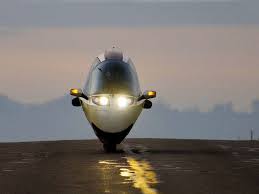
10 million bucks+Very Light Car+102mpg+Wave2+187mpg+E-Tracer+205mpg=the X Prize.

The Very Light Car created by the Edison2 team got the Mainstream Class award, or 5 million dollars. The miles per gallon is 102, and it only weighs 830 pounds. To learn more about the team go HERE.


The Wave2 created by Li-ion Motors received 2.5 million dollars. The miles per gallon is 187.


The E-Tracer created by X-Tracer also received 2.5 million dollars. The miles you can go on one charge is (whew!) 250.


I'm not a "car person". In fact, I really don't like engines, hate fussing with anything beyond the seats, and don't tend to get fond of vehicles in general. But there is something cool about energy-efficient, innovative cars, don't you think?

More links:
Enhanced by Zemanta