0 Kelvin degrees (-273.15 C/-459.67 F) is absolute zero, the point where thermal energy effectively disappears, even if the kinetic energy doesn't. Matter begins to act strange at those extremely low temperatures, presenting quantum effects such as superconductivity and superfluidity. This is due to the Bose-Einstein condensate, which is a state of matter of weakly interaction bosons, within a confined external potential.
Basically, "A new form of matter at the coldest temperatures in the universe", if you'd like the explanation from the website.
Phenomenon caused by absolute zero temperatures:
Superfluidity. At temperatures very, very close to absolute zero (they have't gotten all the way down, if that's even humanly possible) matter acts as if it has no viscosity at all, and that allows it to flow literally anywhere--including up, for gravity doesn't affect things with zero viscosity.
An example of superfluid going up and over:
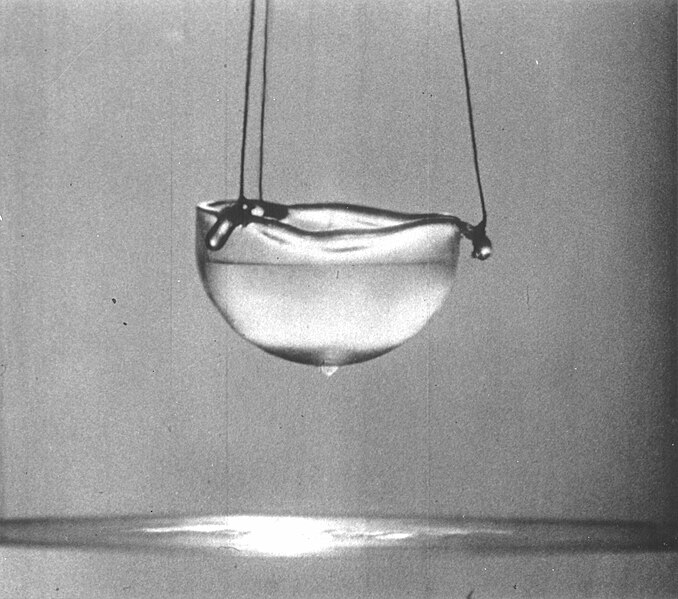
(SOURCE. See the liquid at the bottom? It went up and over the rim of the bowl.)
Superconductivity. This is the state of zero electrical resistance. One fascinating property of this is that if there is electricity flowing through a superconducting wire, it will continue flowing indefinitely, provided the wire stays below a critical temperature.
An example of a magnet levitating due to superconductivity (Meissner effect):

(SOURCE)
*****
To learn more about cold, go HERE to check out the NOVA program website.
Sources:
http://en.wikipedia.org/wiki/Bose%E2%80%93Einstein_condensate
http://en.wikipedia.org/wiki/Superfluidity
http://en.wikipedia.org/wiki/Superconductivity
http://www.colorado.edu/physics/2000/bec/
*****
Thoughts?
-----The Golden Eagle


