Showing posts with label Galaxies. Show all posts

08 April, 2011

A-Z Blogging Challenge: G Stands For: Galaxies

Up to 30 septillion stars make up the 80 billion or so galaxies in the universe. A galaxy consists of stars, stellar remnants, dust, and dark matter.

There are three major types: spiral, elliptical, and irregular.

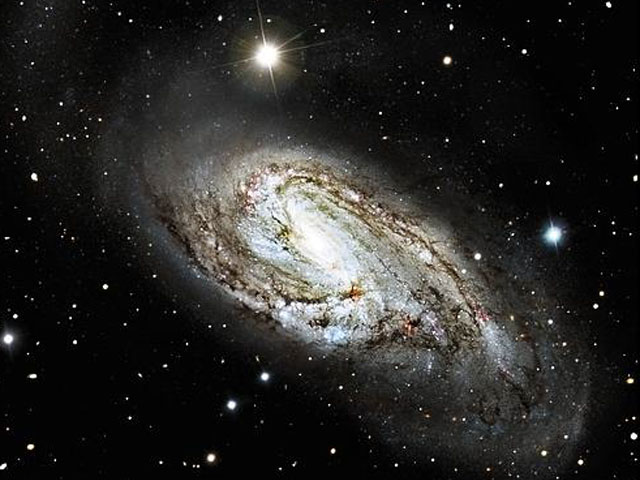
An example of a spiral galaxy:

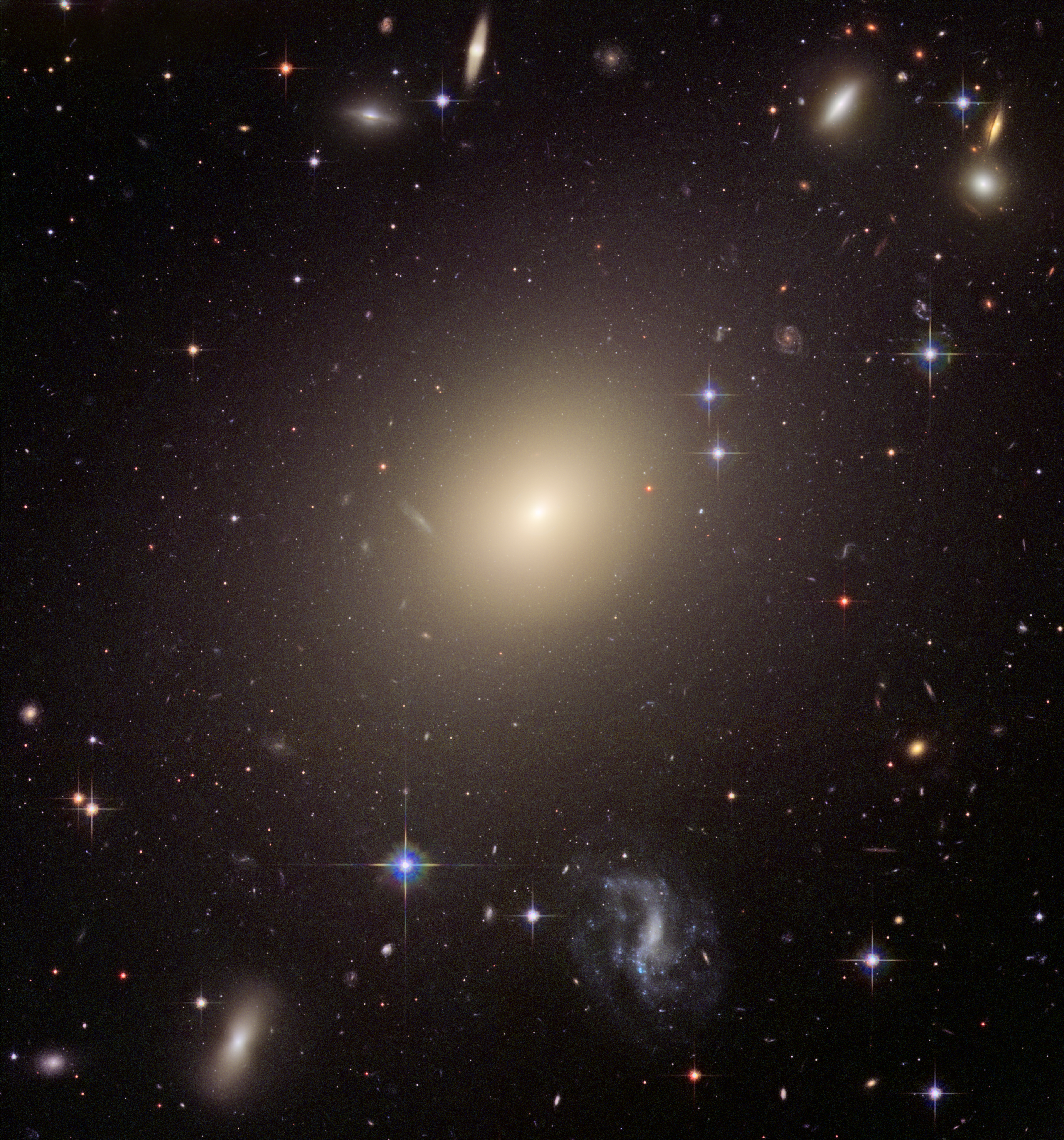
And example of an elliptical galaxy:


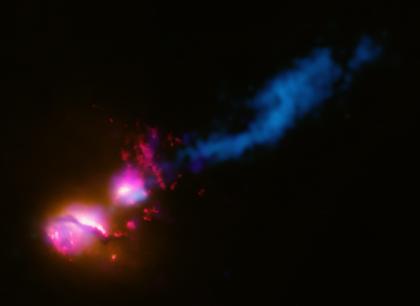
And example of an irregular galaxy:


Galaxies also form clusters and superclusters, the latter of which are galaxies that are not gravitationally bound to one another. Such groups make up much of the structure of the universe.

The Virgo Supercluster includes the Virgo Cluster and the Local Group. Andromeda and the Milky Way are included in the Local Group--and, therefore, us. The Virgo Supercluster's diameter is 33 megaparsecs, which is the equivalent of 110 light years.


*****

Sources:
http://en.wikipedia.org/wiki/Galaxy
http://en.wikipedia.org/wiki/Virgo_Supercluster

*****

Do you think there's a chance of alien life in one of those billions of galaxies? Do you think people will ever find a way to cross "galactic" distances efficiently?


-----The Golden Eagle
Enhanced by Zemanta

01 April, 2011

A-Z Blogging Challenge: A Stands For: Astrophysics

Astrophysics is:

"The branch of astronomy that deals with the physics of the universe, including the physical properties (luminositydensitytemperature, and chemical composition) of celestial objects such as galaxiesstarsplanetsexoplanets, and the interstellar medium, as well as their interactions."


Solar System Planets.Image via Wikipedia

Fascinating stuff, astrophysics.


Especially once you start thinking about just how many discoveries that could still be made about the universe. We know practically nothing about dark matter and dark energy (aside from the fact it exists); there are countless stars that could have exoplanets (and, therefore, the potential for alien life); black holes (which could be at the center of every galaxy in our universe); star-forming regions such as nebulae (which are sometimes also the leftover matter from exploding stars); and the galaxies themselves, which collide and interact (as the Milky Way will with Andromeda, some billions of years from now).


And who knows, maybe in the future people will be exploring the universe beyond this solar system, traveling to other stars, exploring satellites and creating a new frontier in space. There's no telling what could happen if Earth becomes one of two, or several, or many other planets that could sustain human life and we have the technology to take us there.


Ahem.


Can you tell I read and write and love Science Fiction?


*****

And if you want some videos to watch to learn more about astrophysics:


Monster of the Milky Way NOVA Program
Hunting the Edge of Space NOVA two-part series
Origins of the Solar System NOVA Program 


Sources:
http://en.wikipedia.org/wiki/Astrophysics


*****

What do you think of astrophysics? Do you think any major discoveries about the universe will be made in the near future?


-----The Golden Eagle

Enhanced by Zemanta