Showing posts with label Italy. Show all posts

22 April, 2013

A To Z Challenge: Seismology And Scientists Convicted Of Manslaughter

Seismology is a branch of earth science that studies earthquakes. It's a relatively new field due to the fact scientists have only been capable of truly measuring the entire scope of earthquakes for around 100 years, though different societies have had their methods of detecting shifts in the ground for far longer than that--the first seismograph (a device that measures seismic waves, or waves produced by earthquakes or other extreme phenomena) was built in 132 CE in China.


Perhaps a recent development in seismology that has received the most attention was the six-year jail sentence handed down to six scientists and a former government official. In 2009, a 6.3 magnitude earthquake struck the town of L'Aquila in Italy and killed 309 people; the scientists and official, part of a National Commission for the Forecast and Prevention of Major Risks, were accused of manslaughter for failing to predict the earthquake. The court's decision is based on the idea the statements put out by the commission were misleading in that they falsely provided a sense of security before the disaster--at one point, a statement was put out saying there was no danger. However, the scientific community has protested the court's decision because they feel it is, at least partly, an attack on science. Earthquake prediction is extremely difficult and there are zero tried and true methods of figuring out when the next significant quake is going to hit.

**********

Sources:
http://www.thefreedictionary.com/seismology
http://www.geo.mtu.edu/UPSeis/waves.html
http://www.geo.mtu.edu/UPSeis/studying.html
http://www.seismosoc.org/society/education/careers.php
http://earthquake.usgs.gov/learn/glossary/?term=seismology
http://www.bbc.co.uk/news/world-europe-20025626
http://arstechnica.com/science/2012/10/italian-scientists-convicted-of-manslaughter-for-earthquake-risk-report/

**********

Do you agree with the court's decision? Or do you think that in these types of cases, regardless of the number of people dead, there are no grounds for scientists to be convicted?


-----The Golden Eagle

25 April, 2011

A-Z Blogging Challenge: U Stands For: Underground Cities

There's lots of stuff underground. For one thing, if you want to go really far down, there's Earth's core which is approximately 5505 C.

And a bit closer to home there are underground cities, which is what this post is to focus on.

Some notables:

The largest underground city in the world is Montreal's RÉSO, or La Ville Souterraine. It has 30 kilometers (19 miles) of tunnel, spread across 12 square kilometers (4.6 square miles). The 3.6 square kilometers (1.4 square miles) of floor space provide 80% of Montreal's office space, 35% of its commercial space, and during the winter around 500,000 thousand people use the city. There are 10 metro stations, 1,200 offices, 2,000 stores, 1,600 housing units, 200 restaurants, 2 universities, 40 banks, 7 hotels, a cathedral, exhibition halls, and a sports complex.


The catacombs of Rome are under and close to the city. There are at least 40 catacombs discovered. They began in the 100s and, due to overcrowding and shortage of land, systems were built on top of each other by the excavators; the catacombs cover 2.4 square kilometers. There are also 6 known Jewish catacombs, discovered in 1918, which extend for 13,000 square meters (140,000 square feet) and are from around 100-200 AD, possibly still used in the 400s.


Derinkuyu is the largest excavated underground city in Turkey. It is part of a network of underground complexes found across Cappadocia, which is what the area including the provinces of Aksaray, Nevsehir, Nigde, Kayseri and Kirsehir, is called, in the Central Anatolian region. Derinkuyu has 11 floors, goes to a depth of 85 meters, and could hold between 35,000 and 50,000 people. There were wine and oil presses, cellars, stables, chapels, and, unique to Derinkuyu, a religious school set in a chamber with a barrel-vaulted ceiling.


Dìxià Chéng is a bomb shelter under Beijing, China. It was built in the 1970s in case there was a nuclear war with the Soviet Union, and because it was for military defense, it has been called the Underground Great Wall. It covers 85 square kilometers (33 square miles), and is 8-18 meters (26-59 feet) below the surface. There were 90 hidden entrances to the tunnels, but now there is only one at Chongwen Qu. The complex had restaurants, schools, factories, warehouses, theaters, clinics, a skating rink, a mushroom farm for growing foods that don't require much light, and over 70 sites for potential water wells. There was protection from chemical attack, radioactive fallout, and even flood.


*****

Sources:
http://en.wikipedia.org/wiki/Underground_city
http://montreal.streetviewtours.com/attractions/montreal-underground-city/
http://en.wikipedia.org/wiki/Underground_City,_Montreal
http://www.aviewoncities.com/montreal/reso.htm
http://en.wikipedia.org/wiki/Catacombs_of_Rome
http://www.tours-italy.com/rome/catacombs.htm
http://www.cappadociaturkey.net/
http://www.cappadociaturkey.net/derinkuyu_underground_city.htm
http://en.wikipedia.org/wiki/Derinkuyu_Underground_City
http://www.stay.com/beijing/attractions/9589/dixia-cheng-underground-city/
http://en.wikipedia.org/wiki/Underground_City_(Beijing)

*****

Have you ever visited an underground city? If so, which one? If not, do you want to?


I hope you all had a happy Easter!


-----The Golden Eagle

09 April, 2011

A-Z Blogging Challenge: H Stands For: Herculaneum

I know I've posted about this before, but since I really do think this city deserves more attention . . . have you ever heard of Herculaneum?


You know, the city that got destroyed by Vesuvius in 79 AD?

Yes, Pompeii was bigger. Yes, they found buildings and macabre human-shaped cavities. Yes, there is some interesting stuff at the city.

But I still think Herculaneum is cooler.


Recently, archaeologists have found the old basilica, a painted statue head, mosaics, a loaf of bread, even wooden structures such as furniture and buildings, thanks to the heat and intensity the pyroclastic flow. And that's after people back in the 1700s or so looted the place, digging tunnels throughout the ruins (Herculaneum was buried under 65+ feet of ash) and hacking apart many of the paintings to sell.

The only problem with excavating it is that there's a city above the ruins.


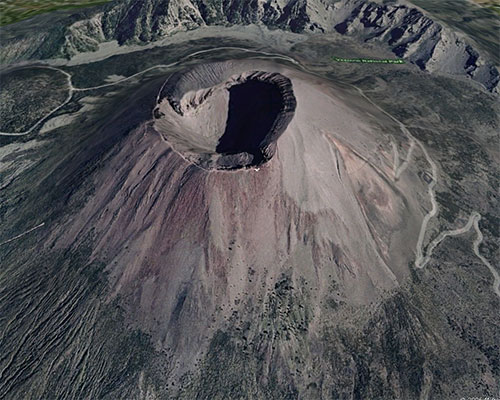
Of course, having a city there is rather dangerous. If Vesuvius erupts again like the way it did in 79 AD--and that's not impossible in the least--it could mean a disaster many, many times greater than the one thousands of years ago. 6 million people live where Herculaneum, Pompeii, Stabiae, and Oplontis (those are the other towns destroyed) used to be. Evacuation plans for the Bay of Naples only account for 600,000.

*****

If you'd like to learn more, go HERE to the PBS Secrets of the Dead and watch the video.

Sources:
http://en.wikipedia.org/wiki/Herculaneum

*****

The danger of a volcanic eruption aside, it's a cool site, don't you think?


-----The Golden Eagle