Showing posts with label History. Show all posts

09 April, 2013

A To Z Challenge: Horology And How Your Computer May Be Going To Spaz

  © Copyright Peter Trimming and licensed for
reuse under this Creative Commons Licence
Horology is the science of measuring time and the study of making timepieces. Humans have been working at the definition and measurement of time for thousands of years; as early as 3100 BCE the Egyptians had developed a 365-day calendar based on the appearance of the star Sirius in the sky and around 3500 BCE they had developed obelisks that acted as sundials. Technology has come a very long way since large angular pillars stuck in the ground, and our current idea of a "clock"--a steady mechanism capable of standing on its own--began to emerge in 1656 when Christiaan Huygens developed the first pendulum clock.

Taking another rather large leap forward in time, today's computers (whether PC or Apple or what have you) are running on what's known as Unix Time. (The name "Unix" comes from the fact it was a dominant operating system back when computing was just getting started.) It's based on a 32-bit number and has been counting every second since January 1, 1970.

Once the number reaches 2,147,483,764, however, there's a bit of a problem: When a 32-bit number reaches this value, it can no longer count upwards. Because of this, computers using Unix Time will revert to December 13, 1901 once time hits January 19, 2038, i.e. devices will believe it's the 1900s when it's actually the mid-2000s. The solution? Switch to 64-bit systems, which will run out of values in the year 292,277,026,596.


**********

Sources:
http://www.thefreedictionary.com/horology
http://www.horology.com/vir-lib-horology.htm
http://www.nist.gov/pml/general/time/index.cfm
http://www.unixtimestamp.com/index.php

**********

Is your computer a 32-bit? Do you think there will be any major problems in 2038, or do you think all the important devices will have been replaced with 64-bit by then?


-----The Golden Eagle

04 July, 2011

Happy 4th of July!

On July 1st, 1776, the Second Continental Congress convened in Philadelphia, Pennsylvania, and took a vote. Nine out of the thirteen delegations (one for each colony) voted for declaring independence, while Pennsylvania and South Carolina voted against, Delaware split with one delegate on each side, and New York could not vote. But delegates wanted the vote to be unanimous, and not a divided. So they postponed it.

On July 2nd, there was another vote by Congress. Two Pennsylvania delegates abstained and the colony turned out in favor of declaring independence, South Carolina switched, and aside from New York (which still could not vote), the decision came out 12 colonies in favor.

On July 4th, 1776, Congress formally adopted the United States Declaration of Independence, written by the Committee of Five, which consisted of Thomas Jefferson (who wrote the first draft), John Adams, Robert R. Livingstone, Benjamin Franklin, and Roger Sherman.

To read the Declaration of Independence, go HERE.


*********

Sources:
http://www.archives.gov/exhibits/charters/declaration_history.html
http://www.ushistory.org/DECLARATION/timeline.htm
http://www.archives.gov/exhibits/charters/declaration_timeline.html
http://www.history.com/topics/declaration-of-independence
http://www.history.com/this-day-in-history/congress-votes-for-independence
http://en.wikipedia.org/wiki/Declaration_of_Independence#Draft_and_adoption

*********

Have a great holiday, everyone!


-----The Golden Eagle

25 April, 2011

A-Z Blogging Challenge: U Stands For: Underground Cities

There's lots of stuff underground. For one thing, if you want to go really far down, there's Earth's core which is approximately 5505 C.

And a bit closer to home there are underground cities, which is what this post is to focus on.

Some notables:

The largest underground city in the world is Montreal's RÉSO, or La Ville Souterraine. It has 30 kilometers (19 miles) of tunnel, spread across 12 square kilometers (4.6 square miles). The 3.6 square kilometers (1.4 square miles) of floor space provide 80% of Montreal's office space, 35% of its commercial space, and during the winter around 500,000 thousand people use the city. There are 10 metro stations, 1,200 offices, 2,000 stores, 1,600 housing units, 200 restaurants, 2 universities, 40 banks, 7 hotels, a cathedral, exhibition halls, and a sports complex.


The catacombs of Rome are under and close to the city. There are at least 40 catacombs discovered. They began in the 100s and, due to overcrowding and shortage of land, systems were built on top of each other by the excavators; the catacombs cover 2.4 square kilometers. There are also 6 known Jewish catacombs, discovered in 1918, which extend for 13,000 square meters (140,000 square feet) and are from around 100-200 AD, possibly still used in the 400s.


Derinkuyu is the largest excavated underground city in Turkey. It is part of a network of underground complexes found across Cappadocia, which is what the area including the provinces of Aksaray, Nevsehir, Nigde, Kayseri and Kirsehir, is called, in the Central Anatolian region. Derinkuyu has 11 floors, goes to a depth of 85 meters, and could hold between 35,000 and 50,000 people. There were wine and oil presses, cellars, stables, chapels, and, unique to Derinkuyu, a religious school set in a chamber with a barrel-vaulted ceiling.


Dìxià Chéng is a bomb shelter under Beijing, China. It was built in the 1970s in case there was a nuclear war with the Soviet Union, and because it was for military defense, it has been called the Underground Great Wall. It covers 85 square kilometers (33 square miles), and is 8-18 meters (26-59 feet) below the surface. There were 90 hidden entrances to the tunnels, but now there is only one at Chongwen Qu. The complex had restaurants, schools, factories, warehouses, theaters, clinics, a skating rink, a mushroom farm for growing foods that don't require much light, and over 70 sites for potential water wells. There was protection from chemical attack, radioactive fallout, and even flood.


*****

Sources:
http://en.wikipedia.org/wiki/Underground_city
http://montreal.streetviewtours.com/attractions/montreal-underground-city/
http://en.wikipedia.org/wiki/Underground_City,_Montreal
http://www.aviewoncities.com/montreal/reso.htm
http://en.wikipedia.org/wiki/Catacombs_of_Rome
http://www.tours-italy.com/rome/catacombs.htm
http://www.cappadociaturkey.net/
http://www.cappadociaturkey.net/derinkuyu_underground_city.htm
http://en.wikipedia.org/wiki/Derinkuyu_Underground_City
http://www.stay.com/beijing/attractions/9589/dixia-cheng-underground-city/
http://en.wikipedia.org/wiki/Underground_City_(Beijing)

*****

Have you ever visited an underground city? If so, which one? If not, do you want to?


I hope you all had a happy Easter!


-----The Golden Eagle

13 April, 2011

A-Z Blogging Challenge: K Stands For: Kites

I'm mean the string-paper-cloth-wood-plastic-whatever things you send up into the air. Not the bird. Although I do think the bird is cool, with the white head and colorful feathers--

Ahem.


A little history:

Kites were first used around 800 BCE in China. At that time, they were made out of silk and bamboo--silk for both the cloth and the string, bamboo for the framework. They were even fitted with whistles and strings to make musical sounds while flying, and decorated with symbols.


In the 1200s, Marco Polo--that well-known explorer--went to Europe with stories about kites, and sailors from Japan and Malaysia in the 1500s and 1600s brought them back. Even so, it was until the 1700s and the 1800s that kites began to be used for scientific purposes. (One of the more famous examples would be sending up a kite to see if it attracts lightning.)


The first known example of hang gliding, for a glider is a kind of kite, is Yuan Huangtou, a Chinese Emperor who was flown down from a tower in 559 AD against his will. He survived (although he was to be executed later), unlike some other royalty who have gotten into the air, such as King Bladud who fell to his death in 880 BC.


As for me, I have a bad history with kites. They always seem to have some kind of agenda. It's either a.) the kite breaks b.) refuses to go up in the air c.) the wind doesn't cooperate or d.) there isn't enough space. Maybe I read too much Peanuts.


*****

Sources:
http://en.wikipedia.org/wiki/Kite

*****

Have you ever flown a kite?


-----The Golden Eagle
Enhanced by Zemanta

09 April, 2011

A-Z Blogging Challenge: H Stands For: Herculaneum

I know I've posted about this before, but since I really do think this city deserves more attention . . . have you ever heard of Herculaneum?


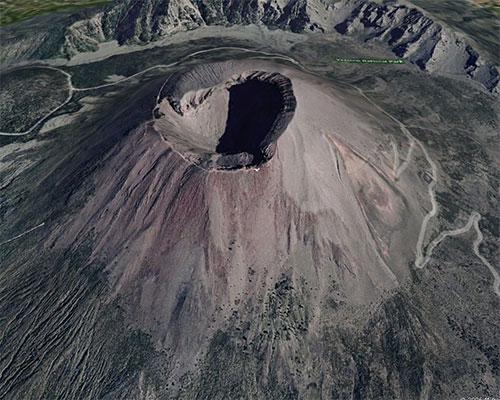
You know, the city that got destroyed by Vesuvius in 79 AD?

Yes, Pompeii was bigger. Yes, they found buildings and macabre human-shaped cavities. Yes, there is some interesting stuff at the city.

But I still think Herculaneum is cooler.


Recently, archaeologists have found the old basilica, a painted statue head, mosaics, a loaf of bread, even wooden structures such as furniture and buildings, thanks to the heat and intensity the pyroclastic flow. And that's after people back in the 1700s or so looted the place, digging tunnels throughout the ruins (Herculaneum was buried under 65+ feet of ash) and hacking apart many of the paintings to sell.

The only problem with excavating it is that there's a city above the ruins.


Of course, having a city there is rather dangerous. If Vesuvius erupts again like the way it did in 79 AD--and that's not impossible in the least--it could mean a disaster many, many times greater than the one thousands of years ago. 6 million people live where Herculaneum, Pompeii, Stabiae, and Oplontis (those are the other towns destroyed) used to be. Evacuation plans for the Bay of Naples only account for 600,000.

*****

If you'd like to learn more, go HERE to the PBS Secrets of the Dead and watch the video.

Sources:
http://en.wikipedia.org/wiki/Herculaneum

*****

The danger of a volcanic eruption aside, it's a cool site, don't you think?


-----The Golden Eagle

13 February, 2011

Book Review: The Ring of Solomon


Title: The Ring of Solomon
Author: Jonathan Stroud
Publisher: Hyperion Books
Genre: Fantasy/Adventure/Humor
Page Count: 398
Rating: 5 out of 5
Cover Rating: 4.5 out of 5. I love this cover! The only thing that prevented me from giving it a 5 was the fact it is a teensy bit spoilery, if you take it literally. Which I tend to do. (THIS COVER is also cool, but the gargoyle is rather grotesque.)

Inside flap:
It is 950 B.C.E., and King Solomon rules Jerusalem with a steely hand; a hand on which gleams a magic ring of immense and unforgiving power. Solomon has just begun to work on his marvelous temple, charging Khaba, a formidable magician in his royal court, to oversee its construction. The workforce is an ill-behaved bunch of demons, a particularly unruly djinni names Bartimaeus among them. True to form, Bartimaeus promptly gets kicked off the temple project and assigned the even more miserable task of hunting bandits in the desert. There he crosses paths with Asmira, a highly skilled and loyal captain of the Queen of Sheba's guard, on a suicidal mission to save her country from Solomon's imminent attack. Of course, Bartimaeus has no intention of helping her. That is, until Asmira makes him an offer he cannot refuse . . .

My expectations: High. I LOVE The Bartimaeus Trilogy, and I expected a lot from this prequel.

My expectations were met, and even exceeded in some ways.

About the book: I love Bartimaeus. He is one of the funniest, most endearing characters in the Fantasy books I've read, and definitely the best dijinni. I found the historical setting in this book quite interesting, along with the portrayal of both the Queen of Sheba and King Solomon and the whole culture across that area.

The writing style is great--Jonathan Stroud writes well, and as with all Bartimaeus books, the little footnotes that serve as wisecracks are definitely a bonus, even if the reader has to keep glancing down at the bottom of the page. For some authors that would be a drawback, but for Stroud it certainly isn't.


  • Plot:
Fast, and there are several unexpected twists--it never lagged, and the ending wound up everything well.


  • Characters:
Bartimaeus, as I have mentioned, is quite funny. You get a lot of his character in this book, from the dancing hippo (I cracked up at that part) to the banter with his fellow djinni.

Asmira was a determined, and strong girl. She does what she has to do to accomplish her mission. I didn't really like her at the start, but by the end of the book I did. She changes throughout the story, even though it doesn't span that much time.


Khaba is an excellent antagonist. Evil, cunning, and power-driven, he has all the right stuff. Or, rather, wrong stuff. He knows what he wants and he'll do anything from torture to killing to get it, and is a formidable enemy.


  • Setting/Elements:
The setting--historical figures, warriors, demons, magic--is fascinating, and something unique; it's nice to be able to read something that's put in a setting different from a lot of other books.

Other: Violence, (bandits, assassins, etc.), but that's really about it.

Do I recommend this book? Absolutely!

-----The Golden Eagle

28 October, 2010

Herculaneum Was There, Too!

You've heard of Pompeii, I bet. You also probably know what happened that day, August 24th 79 AD. But did you know about Herculaneum?

I've noticed that in a lot of history books there's practically nothing about Herculaneum. The most I've found is a mention that it was buried under 65 feet of ash. You would think that there would be more about a city buried under 65 feet of ash, but unfortunately, no.

That's why I was thrilled when Secrets of the Dead: Herculaneum Uncovered was aired last night:


Because someone had decided this Roman city was finally worth looking into!

I didn't know about much of what they said. Like, that the Bourbons looted the place through a maze of tunnel leading underground. Or that the citizens of Herculaneum hid in the boat sheds as the pyroclastic flows enveloped their city. Or that 2000 year-old-bread is in existence, and even has its owner's name on it. There's ancient, carbonized furniture, and some pieces of wood that were not carbonized.


But even Pompeii and Herculaneum weren't the only cities--Stabiae and Oplontis were also wiped out.

I always find less-discovered places and people fascinating. There's so much more to learn that way. :)


-----The Golden Eagle

25 August, 2010

The Four Winged Dinosaur

Microraptor is one cool . . . dinosaur-slash-bird. I mean, there aren't any animals with wings on their hinds legs and certainly not ones that glide like flying squirrels. And they don't look like anything from our time, either, with a dinosaur-like beak, a long tail, and four wings.

Dinosaurs are not what you usually think of when you think of the origin of birds. They don't really look like birds in, say, Jurassic Park or in the typical T. Rex image, but dinosaurs did have feathers. And now there's evidence that Microraptor may just have been the divergent point in evolution where dinosaurs and birds branched off. Unless, of course, an earlier fossil with wings appears somewhere around the world . . .


Watch the full episode. See more NOVA.


If that doesn't load, go HERE. Pretty cool animal, eh?

Another hit for NOVA. :)

(Hmmm. Think I should change my name to "The Golden Microraptor"? JK. I like eagles just fine.)

-----The Golden Eagle