Showing posts with label Planet Earth. Show all posts

08 April, 2013

A To Z Challenge: Geodesy And GPS

Geodesy is the study of planet Earth's physical characteristics. It uses mathematics to determine precise geographical points and measure the size and shape of sections of the surface; geodesy also includes physics and astronomy to make calculations and build accurate models of the planet.

One leap in geodesy has been the arrival of satellite technology. As you might expect, this has greatly expanded the amount of data available--scientists can now see things that had been previously out of view. Studies of the water cycle, glaciers and ice sheets, atmospheric temperature, and other global events have since revealed complex interactions across continents.

However, the most familiar application of geodesy is probably your everyday Global Positioning System or GPS. Geodesy is the scientific field that developed techniques for pinpointing an object's location on the surface and methods of tracking said object. In many cases, this is likely your car or phone.

**********

Sources:
http://www.thefreedictionary.com/geodesy
http://www.jqjacobs.net/astro/geodesy.html
http://oceanservice.noaa.gov/facts/geodesy.html
http://oceanservice.noaa.gov/education/tutorial_geodesy/
http://www.ngs.noaa.gov/PUBS_LIB/Geodesy4Layman/TR80003A.HTM#ZZ2
http://www.agu.org/sections/geodesy/
http://www.pbs.org/wgbh/nova/space/earth-from-space.html

**********

Have you ever tried GPS? Do you use it often? Have you ever run into glitches like we did once, where it sent us around a roundabout an extra few miles because it didn't understand the building we were looking for was on the other side of the roundabout?


-----The Golden Eagle

01 April, 2013

A To Z Blogging Challenge: Astrophysics And Asteroids

Today is the kickoff of the A to Z Blogging Challenge!

My theme this year is science. Specifically, recent discoveries in science: Last year I explored various fields and gave overviews of what they were all about, but this time I've decided to track down some interesting discoveries/recent developments in scientific fields and post about those. I'm also winging the challenge--not exactly by choice, but I'm looking forward to seeing what I can come up with on a moment's notice. (Hopefully our internet connection will stop acting weird and let me blog normally soon. Pages are taking minutes to load for some reason.)

But before we finally get to the actual content of my post, I'd like to give a shout-out to the creator of the A to Z Challenge, Arlee Bird. He's an amazing blogger and built a challenge that has allowed people to explore the web and get to know people they'd normally never find.

Now, for my first A to Z Challenge entry: Astrophysics and Asteroids

Astrophysics is the study of space and the universe, such as stars, planets, matter, energy, and practically everything that involves the world beyond Earth. It's the examination of how celestial objects form or self-destruct; it raises questions about what occurred and is occurring in the universe.

The universe, of course, includes asteroids. On February 15th this year, as you've most probably heard, an asteroid (a "superbolide", bolide referring to the bright light it produced) hit the atmosphere and exploded over the Ural Mountains in Russia, above the town of Chelyabinsk. The asteroid was around 17-20 meters across and had a total impact energy of 440 kilotons of TNT, though around 90 kilotons was released as light.

Chebarkul meteorite sample on lake ice
Astrophysics has helped determine the size, velocity, and the likelihood of such an event occurring again. The chances of another asteroid exploding in the atmosphere is not, in fact, as low as you might think; since much of Earth's surface area is uninhabited by people, these types of explosions may occur from every few decades (which is the shortest estimate) to about 100 years and just go unnoticed. More are being found these days due to sensors put in place for the detection of nuclear blasts.

One thing astrophysics can't do, however, is predict such asteroids in advance. They're too minute for current methods and technology to find before they strike the planet, though there are plans to build a new satellite that would orbit the Sun and could be capable of pinpointing the smaller objects.


**********

Sources:
http://www.pbs.org/wgbh/nova/earth/meteor-strike.html
http://neo.jpl.nasa.gov/news/fireball_130301.html
http://science.nasa.gov/astrophysics/
http://io9.com/5985276/incredible-details-are-emerging-about-russias-chelyabinsk-meteor

**********


Do you think there should be more effort put into defending Earth from asteroids?

If you're participating in the A to Z Challenge, what did you choose for letter A?


-----The Golden Eagle

29 April, 2011

A-Z Blogging Challenge: Y Stands For: Yellowstone

Yellowstone was the world's first national park. It was established in 1872, signed into law by Ulysses S. Grant on March 1st. It is a World Heritage Site and designated Biosphere Reserve, with 2.2 million acres, and covers parts of Wyoming, Montana, and Idaho.

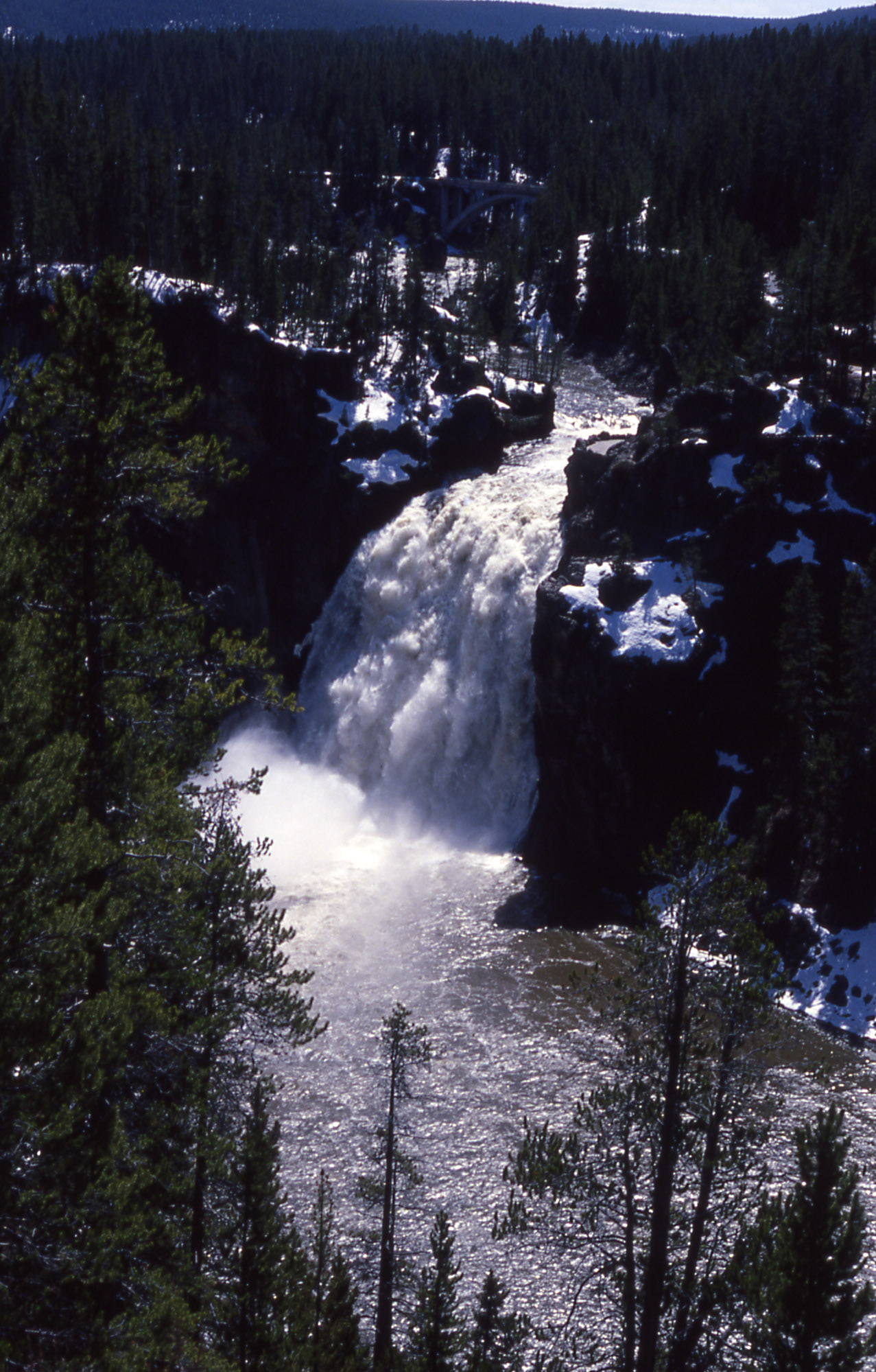
(Yellowstone River, Upper Falls. SOURCE)

The name "Yellowstone" came from the Minnetaree (a Native American Indian tribe) word for a river with yellow sandstone bluffs: "Mi tsi a-da-zi". French trappers interpreted this as "Yellow Rock River", and called it "Pierre Jaune" or "Roche Jaune". Lewis and Clark came into contact with the same tribe, and also called it Yellow Rock River.

(Canada Lynx. SOURCE)

Yellowstone National Park is home to several threatened endangered species, including the Canada Lynx, the gray wolf, and the grizzly bear. Some other notable animals are the American bison, bighorn sheep, bobcats, coyotes, elk, moose, mountain lions, mule deer, to name the large ones. 67 mammal species live in the park (the largest concentration in the 48 states), 322 species of birds are recorded (148 of them nesting in the park), 16 species of fish (although 5 of them are non-native), 6 reptile species, and 4 species of amphibians. There are also 7 conifer species, 1,100 native species of plants, 199 non-native species of plants, 186 species of lichens, and 406 species of thermophiles.


The Yellowstone Caldera is the largest supervolcano in North America. It is indeed considered an active volcano, producing half the world's volcanic activity. The caldera has been measured at 55 km (34 miles) by 72 km (45 miles) in size, although a new survey has shown it could extend for up to 640 km (400 mi) east to west.


Three supereruptions have happened in Yellowstone's history--at 2.1 million, 1.3, and 640,000 years ago. The last time Yellowstone exploded, it sent 1,000 cubic km (240 cubic mi) of dust into the air, and if it was to erupt again (supervolcano eruptions are predicted to happen sometime in the future; in fact, we're overdue) it could bury North America in ash and disrupt life around the globe.


They say it won't be happening anytime soon. But, obvious in the recent catastrophes, the prediction of earthquakes, volcanoes, and other natural disasters is shaky at best.

*****

Source:
http://www.nps.gov/yell/index.htm
http://www.yellowstone-natl-park.com/history.html
http://www.nps.gov/yell/planyourvisit/factsheet.htm
http://en.wikipedia.org/wiki/Yellowstone
http://www.yellowstone-online.com/history/yhtwo2.html
http://www.visityellowstonepark.com/Park-Facts.aspx
http://www.nps.gov/yell/naturescience/mammals.htm
http://en.wikipedia.org/wiki/Animals_of_Yellowstone
http://www.nps.gov/yell/parkmgmt/bisoneiscon5.htm
http://www.livescience.com/200-super-volcano-challenge-civilization-geologists-warn.html
http://www.huffingtonpost.com/2011/04/13/yellowstone-supervolcano-2011_n_848681.html

*****

Do you think supervolcano eruptions are something we should be worried about? Do you think Yellowstone will erupt in the near future, or do you think this is just a bunch of pointless speculation?


Also, have you ever been to Yellowstone?


-----The Golden Eagle
27 April, 2011

A-Z Blogging Challenge: W Stands For: Water

Water is one oxygen atom and two hydrogen atoms: H20.


Because of the way the hydrogen atoms are attached, water molecules have a slight positive charge and a slight negative charge, which attracts the other water molecules around them. The polar nature of water means it has a high surface tension--and that tension decreases with temperature. This is why hot water cleans better, since there's less surface tension and the water can get into all the smaller pores and whatnot. Soaps and detergents also lower surface tension.


Water has three states of matter. There's water as a solid (ice), water as a liquid (which is what we usually know it as), and water as gas (steam). Water going from solid to liquid is melting, liquid to gas is evaporating, gas to liquid is condensation, gas to solid is frost formation, and solid to gas is sublimation.


Water forms from the nuclear fusion at the core of stars. When the hydrogen that's fused into helium is used up and the helium begins to fuse, oxygen is produced. Then iron is formed, and there are no stable reactions possible to fuse the iron, so the star explodes. The supernova remnants get thrown out through space and the elements (including oxygen) are free in the interstellar medium. And since hydrogen is three times more abundant than helium, oxygen and hydrogen eventually bind together.

***Due to problems with bandwidth (the site inserted an image in here that said "STOP THIEF"--or, more accurately, it was "STOP THEIF") I removed this image. Check link below to see the image.***

Because water is (at least here on Earth, and it's likely to be the same elsewhere) vital for life, there's a hunt on to find it in other places throughout the universe. Some places it has been found include the Moon (more famously in the form of NASA's LCROSS spacecraft which purposefully crashed into the surface), comets, and Mars. There are signs of water on Europa and Ganymede (Jupiter's moons), and the spectrum (the wavelength of light emitted by atoms) of water has been found in interstellar clouds.


*****

Sources:
http://hyperphysics.phy-astr.gsu.edu/hbase/surten.html
http://en.wikipedia.org/wiki/H2O
http://ga.water.usgs.gov/edu/index.html
http://en.wikipedia.org/wiki/Water
http://www.uni.edu/~iowawet/H2OProperties.html
http://witcombe.sbc.edu/water/physicsuniverse.html

*****

Do you think we'll find out for sure that there are large quantities of water on other planets? Do you think we'll ever be using water from other planets or moons to help us travel through space?


-----The Golden Eagle
Enhanced by Zemanta

06 April, 2011

A-Z Blogging Challenge: E Stands For: Eagles

How could I resist?

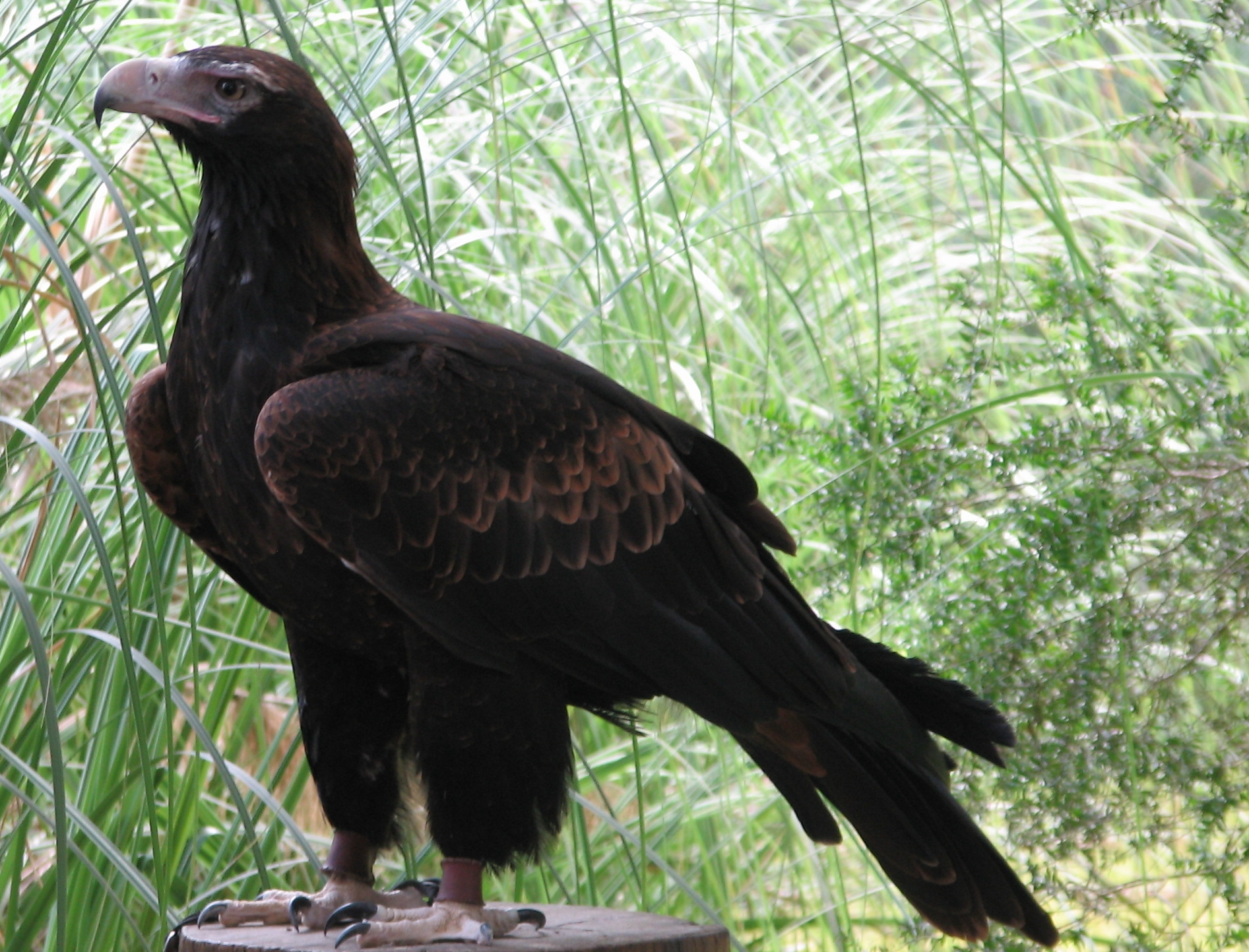
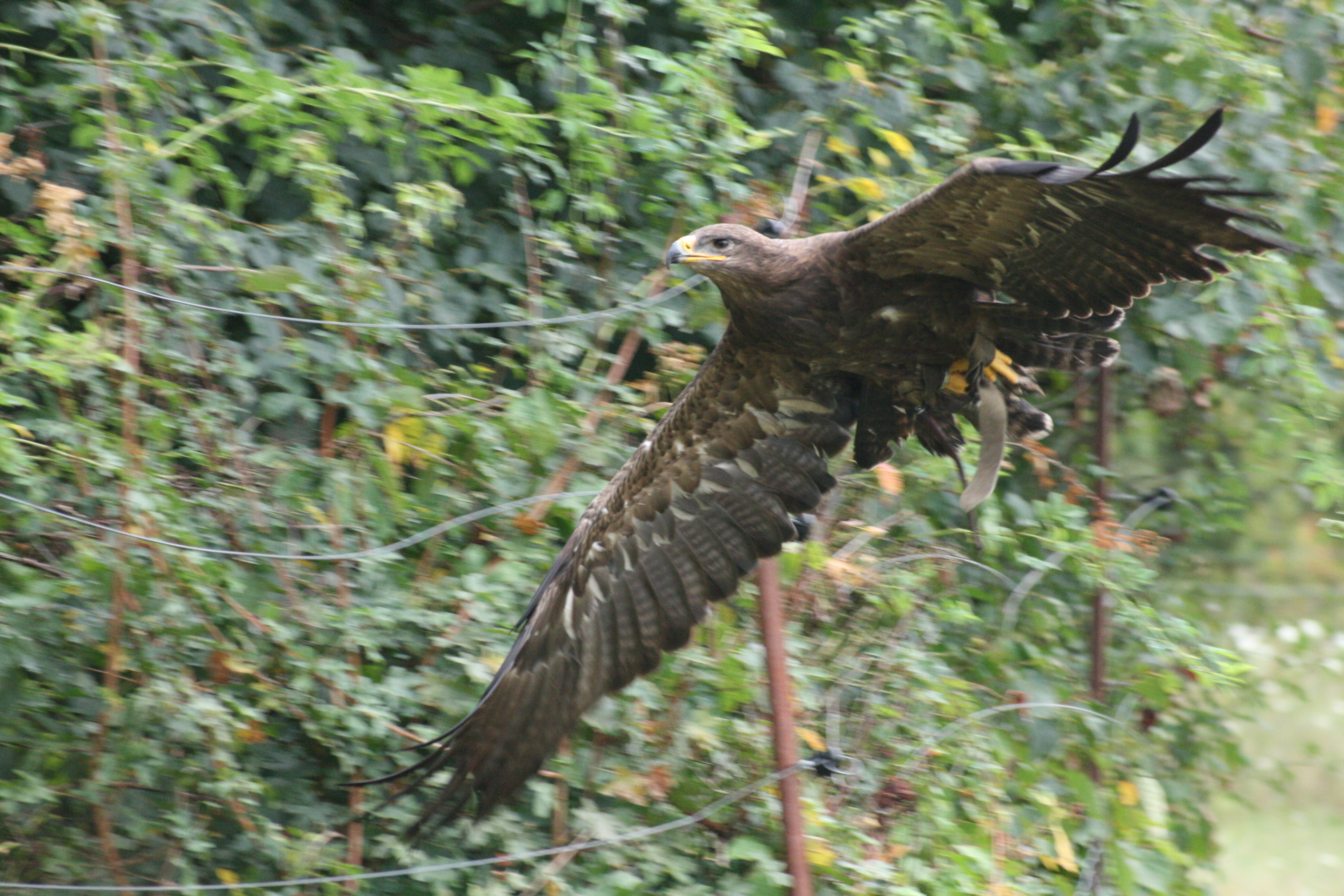
The Golden Eagle Aquila chrysaetos is one of t...Image via Wikipedia

Eagles are part of the bird family Accipitridae, and there are over 60 different species of eagle. The word "eagle" is derived from the Latin word "aquila", which may come from the word meaning dark-colored, swarthy, or blackish, referring to the eagle's feathers.

The Golden Eagle, or Aquila Chrysaetos (trust me, I never considered going around with the name Aquila chrysaetos) lives across North America, Eurasia, and parts of Africa, with its densest nesting populating living in Alameda County, California. Its size ranges from 70 to 85 cm/2 ft 4 in to 2ft 9 in in length, and the wingspan is 185 to 220 cm/6 ft 1 in to 7 ft 3 in. The species was first described in 1758 by Linnaeus. It is part of a worldwide superspecies with Verreaux's Eagle, Gurney's Eagle, and the Wedge-Tailed Eagle.


The Bald Eagle, the national bird of the USA, is a kind of sea eagle. It lives across the entire United States (in theory--people have driven them out in a lot of areas thanks to habitat destruction and so forth), parts of Canada and Alaska, and in northern Mexico. It was put on the list of threatened species on July 12, 1995 thanks to a dramatic drop in population numbers, but was then removed from it on June 28, 2007. (Hooray!)


Technical details aside, I love these birds because they're beautiful creatures. It's amazing to watch any bird fly--but I find something special about eagles. Their grace in the air, the way they dive, their proud, noble expressions. They're just amazing birds.


*****

*sighs happily*


Sources:

http://en.wikipedia.org/wiki/Eagle
http://en.wikipedia.org/wiki/Bald_Eagle

Do you have a favorite eagle? Is there a kind of animal that you love?


-----The Golden Eagle
Enhanced by Zemanta

25 August, 2010

The Four Winged Dinosaur

Microraptor is one cool . . . dinosaur-slash-bird. I mean, there aren't any animals with wings on their hinds legs and certainly not ones that glide like flying squirrels. And they don't look like anything from our time, either, with a dinosaur-like beak, a long tail, and four wings.

Dinosaurs are not what you usually think of when you think of the origin of birds. They don't really look like birds in, say, Jurassic Park or in the typical T. Rex image, but dinosaurs did have feathers. And now there's evidence that Microraptor may just have been the divergent point in evolution where dinosaurs and birds branched off. Unless, of course, an earlier fossil with wings appears somewhere around the world . . .


Watch the full episode. See more NOVA.


If that doesn't load, go HERE. Pretty cool animal, eh?

Another hit for NOVA. :)

(Hmmm. Think I should change my name to "The Golden Microraptor"? JK. I like eagles just fine.)

-----The Golden Eagle